Think back to your own school days. You likely don’t remember every lesson you learned, but you probably remember a teacher who made you feel seen, encouraged, and capable. Those relationships stay with us because they shape far more than what we know. They shape who we become.
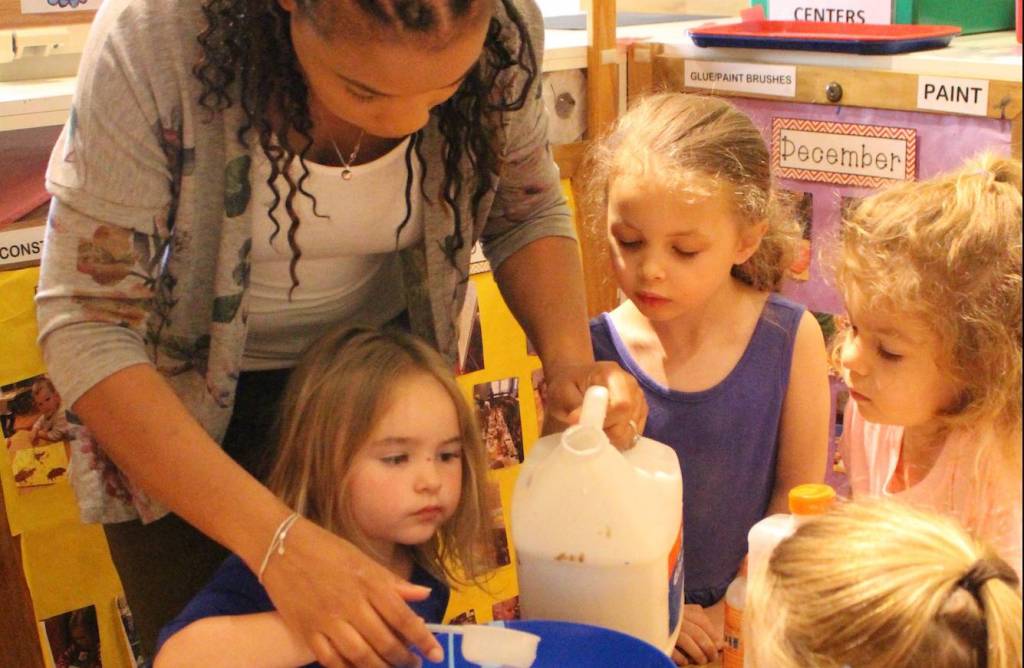
As a parent, I experienced this firsthand. My four children began their school journey at Park Street School’s preschool, where they felt safe, known, and genuinely loved. They couldn’t wait to go to school each morning; not simply because of the engaging activities, but because of the caring teachers who welcomed, encouraged, and delighted in them. Those early relationships made the transition to school joyful and laid a strong foundation for a lifelong love of learning.
Research supports what many parents instinctively know.
A fascinating study conducted in Germany found that young children’s cognitive performance was directly connected to the quality of their relationships with their teachers. Researchers showed nursery school children photographs of their trusted teachers immediately before asking them to solve a series of problems. Children who shared warm, secure relationships with their teachers solved the problems more quickly and effectively than children whose relationships were more distant (Ahnert et al., 2012).
These findings are substantiated in a rigorous analysis of hundreds of academic publications based on numerous studies (including students across 13 different countries and all grade levels) where teacher emotional support of students (warmth, care, respect, emotional encouragement, responsiveness, or sensitivity) as it relates to student outcomes was carefully analyzed. Results confirmed the strong correlation between teacher emotional support and positive student outcomes (particularly academic self-efficacy and engagement), consistent across all teaching models (Fu & Zhou, 2026).
While small class sizes certainly provide opportunities for more individualized instruction, research suggests that their greatest advantage may be the relationships they make possible. Students who are truly known by their teachers are more likely to feel confident, engaged, and motivated to learn.
This remains true throughout a child’s education. In one large study of American adolescents, the single strongest school-based predictor of academic growth in mathematics from grades 8 through 12 was students’ sense of connectedness to their math teachers (Gregory & Weinstein, 2004).
These findings are especially meaningful as education continues to evolve. Today’s students have access to remarkable technology and learning tools, many of which can enrich the classroom. But no innovation can replace the wisdom, encouragement, discernment, and care of an exceptional teacher. Children are not simply acquiring information; they are developing confidence, character, resilience, empathy, and a love of learning. Those qualities are formed through meaningful human relationships.
As parents consider schools for their children, teacher-student relationships deserve to be one of the most important factors in the decision-making process. Ask yourself: Will my child be truly known here? Will there be adults who understand their strengths, encourage them through challenges, and celebrate their growth?
At Park Street School (PSS), we believe education is about far more than academic achievement. It is a deeply human endeavor and, for us, a sacred calling. Our teachers are committed to educating the whole child: body, mind, and spirit. Grounded in our core values of Character, Truth, and Excellence, they partner with families to cultivate compassionate leaders, discerning thinkers, and joyfully resilient learners.
Long after students have forgotten which lesson best enabled them to master division or write an excellent three-point essay, they will remember the teacher who believed in them, challenged them, prayed for them, laughed with them, and helped them discover the person they were created to become. We are grateful every day at PSS for the privilege of being part of that journey.